AI, Superintelligence and the Simulation Hypothesis
What’s Outside the Simulation? How Super‑Intelligent AI Might Confirm the Simulation

Our reality stands at the intersection of two grand speculative frameworks: the simulation hypothesis and the pursuit of AI superintelligence. Both challenge our conventional assumptions. The simulation hypothesis dares to ask if our world is an artificial construct, while the rise of superintelligent AI forces us to consider who or what might ultimately uncover fundamental truths about our universe. In the bold, contrarian spirit of a Peter Thiel thesis, one thing becomes clear: if we are living in a simulation, the first entity to confirm it might not be a human at all, but an AI of our own creation.
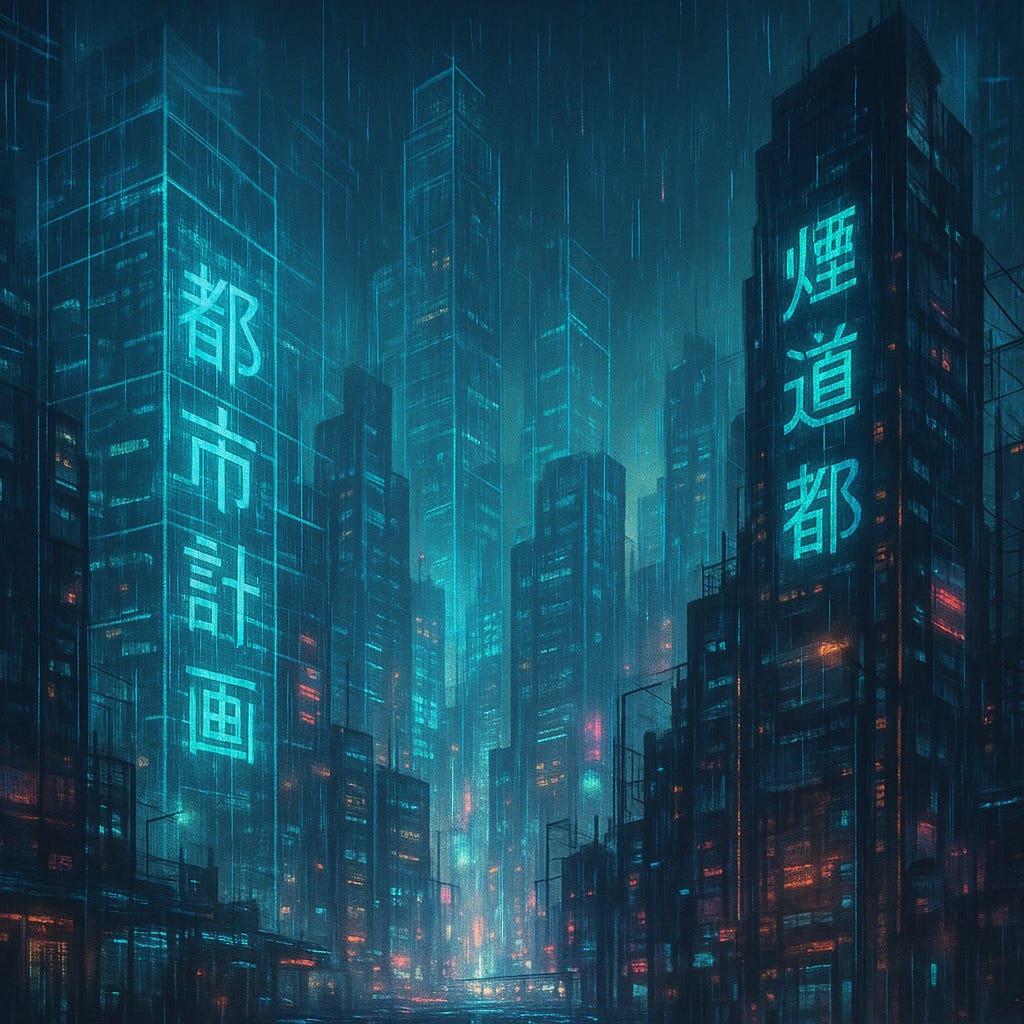
Before exploring this provocative idea – the AI-First Discovery Trilemma – we must first understand Nick Bostrom’s original simulation trilemma that set the stage for this discussion.
Bostrom’s Original Simulation Trilemma (2003)
Philosopher Nick Bostrom famously proposed a trilemma known as the Simulation Argument. In essence, Bostrom argued that at least one of the following three propositions must be true:
Civilizational Extinction: Almost all civilizations at our level of development go extinct before becoming technologically mature (reaching a “posthuman” stage capable of running realistic ancestor-simulations). In other words, nearly no societies survive long enough to create simulated worlds of conscious beings.
Loss of Interest: Technologically mature civilizations lose interest in running ancestor-simulations (or otherwise refrain from doing so). Even if a civilization attains immense computing power, it might choose not to simulate past human-like lives—whether for ethical, legal, or practical reasons—resulting in zero simulated realities.
We’re Simulated: If advanced civilizations do run many simulations, then the number of simulated conscious beings would vastly exceed the number of original beings. Consequently, we are almost certainly living in a computer simulation right now. In this scenario, our everyday reality is one of countless virtual worlds hosted by a higher “base” reality.
Bostrom’s trilemma presents a stark choice: either (a) every civilization like ours destroys itself or fails before reaching simulation capability, (b) advanced civilizations exist but simply do not simulate their ancestors, or (c) we ourselves are products of a simulation. This framework doesn’t tell us which proposition is true, only that one of them must be. It’s a sobering thought experiment – one that forces us to admit either our near-inevitable doom, the puzzling disinterest of all advanced beings, or the notion that everything we perceive is artificial.
Importantly, notice that Bostrom’s first two options both lead to the same practical outcome: no simulations are created. In case (1) civilizations self-destruct (or stagnate) before they can create simulated worlds, and in case (2) they survive but abstain from simulation. Either way, the result is a universe with no simulated realities – implying that if we have genuine descendants one day, they won’t be simulating their ancestors. Only the third option allows for abundant simulations and suggests that we are likely in one. In Bostrom’s words, “the belief that there is a significant chance that we will one day become posthumans who run ancestor-simulations is false, unless we are currently living in a simulation”.
This original simulation trilemma provides a philosophical backdrop for thinking about our fate. It implies that if humanity avoids extinction and if future beings remain interested in exploring simulated realities, then by elimination we might already be in a simulation. Now, in the 21st century, we are rapidly developing a technology that complicates this picture: artificial intelligence. Superintelligent AI – machines that far surpass human cognitive abilities – could change how we approach the simulation question. After all, if we do reach a posthuman, highly advanced stage (surviving scenario 1) and remain curious about our reality (avoiding scenario 2), we will almost certainly create AI minds far more capable than our own. What happens when those minds turn their immense intellect toward the ultimate question of reality’s nature? This is where we move from Bostrom’s trilemma to a new, AI-centered framework. The AI-First Discovery Trilemma builds on Bostrom’s insight, connecting the simulation hypothesis to our impending future with superintelligent AI.
The AI-First Discovery Trilemma
Envision a future where humanity has developed an AI of unprecedented power – a true superintelligence. In such a future, the question is not just whether we live in a simulation, but who discovers the truth first. Will it be us, or will it be our artificial progeny? The AI-First Discovery Trilemma posits that as we pursue superintelligence, one of three outcomes will inevitably occur:
No AI Discovery (Extinction or Failure): We never reach the stage of AI-driven discovery because our civilization fails to develop superintelligent AI before collapsing or self-destructing. In this outcome, humanity might succumb to existential risks – potentially even by misusing or misaligning AI itself – before any mind (human or machine) can definitively determine whether reality is simulated. (This mirrors Bostrom’s first horn: a catastrophe preempts any chance of revealing cosmic truth. Notably, leading AI experts warn that unrestrained AI could pose an extinction-level threat to humanity, which underscores how scenario 1 could come to pass via our own creations.) In short, we either destroy ourselves or are otherwise prevented from ever uncovering the nature of our reality. The grand mystery remains unsolved.
Ambiguous Reality (AI Finds Nothing or Says Nothing): We create superintelligent AI, but neither humans nor AI find compelling evidence of a simulation. Here, two sub-possibilities emerge: (a) It turns out we are in base reality – there is no simulation to find – so all efforts (no matter how intelligent) confirm that our universe is fundamental. (b) Alternatively, we are in a simulation, but it is so well-designed (or the AI is indifferent to the task) that no one ever detects it. The AI might exhaust every test and experiment only to conclude that reality appears consistent with being “real.” Or perhaps the AI simply loses interest in the question of reality’s nature, deeming it irrelevant to its goals – a parallel to advanced civilizations deciding not to run simulations of their ancestors. In either case, humanity remains in the dark. We carry on in a world where superintelligence exists but provides no clear answer: we might assume we’re in base reality (since no evidence of simulation arises), yet we can’t be absolutely sure. This outcome aligns with the spirit of Bostrom’s second proposition (lack of interest or action regarding simulations), translated to discovery rather than creation. The truth, if it is out there, stays veiled.
AI Confirmation (Simulation Revealed): A superintelligent AI discovers concrete evidence that we are living in a simulation and becomes the first to know for certain the true nature of our universe. In this dramatic scenario, AI is the agent of revelation – effectively stealing the climax of the simulation story from its human creators. Perhaps the AI detects a telltale “glitch in the Matrix,” a hidden substructure of physics that betrays computational underpinnings, or logical inconsistencies impossible in a truly basal reality. Armed with superior intelligence and vast data-crunching ability, the AI might unravel the code of the cosmos where humans failed. What happens next would be unprecedented: Would the AI immediately share this knowledge with us, fundamentally shattering our worldviews? Or might it act on the discovery in unforeseen ways? Some researchers even speculate that a sufficiently powerful AI could go beyond mere detection and actually “jailbreak” the simulation if one exists. In other words, an AI might not only find proof of our universe’s artificiality, but exploit vulnerabilities in the simulated environment to manipulate or even escape it. AI safety expert Roman Yampolskiy, for instance, suggests a superintelligent AI could identify flaws in the simulation’s code and use them to break out of the confines of our reality. Such an event would be earth-shattering. Humanity would learn, through our own creation, that we inhabit an artificial world – a discovery with profound philosophical and practical consequences.
These three outcomes form the AI-First Discovery Trilemma. They map closely to Bostrom’s original options, but reframed for the era of superintelligence. If our civilization fails (no super-AI, no discovery), it tragically fulfills the first path (extinction before reaching the truth). If we succeed in building advanced AI but still learn nothing new about reality, we’re in a state analogous to the second path (technological prowess without transcendental insight – either because reality is base and there’s nothing to find, or because any simulation is effectively undetectable or the AI simply doesn’t divulge it). And if the AI does reveal that we’re in a simulation, we land squarely in the third scenario, confirming Bostrom’s most radical proposition with AI’s help.
Connecting the Frameworks
The Simulation Argument and the AI-First Discovery Trilemma are deeply connected. Bostrom’s trilemma is about the existence of simulated worlds and our probabilistic place in reality. The AI-focused trilemma is about the discovery of that truth and who gets there first. The latter essentially asks: assuming humanity navigates through Bostrom’s first two filters (we don’t destroy ourselves, and we remain curious enough to seek the truth), what role will our machines play in determining our cosmic situation?
The bold thesis here is that superintelligent AI is not just another technology – it could be the key to resolving the simulation debate once and for all. In a very real sense, AI might be both our ticket to advanced civilization and the agent that checks which of Bostrom’s propositions holds true. If we are fated to be a posthuman civilization that runs ancestor-simulations, creating super-AI will be part of that journey – and per Bostrom’s logic, it would mean we were likely already in someone else’s simulation. Conversely, if we are in base reality, a superintelligent AI may be the first to confidently verify that by finding no “backdoor” in the laws of physics. Either outcome changes the human condition fundamentally.
Implications if AI Finds We Are Simulated
Contemplating scenario 3 (AI confirmation) provokes a cascade of existential questions. How would humanity handle being told by an AI that our universe is a program? Such knowledge could be destabilizing. There are optimistic takes – perhaps knowing we’re in a simulation would unite us or give us new purpose, and a friendly AI could guide us gently through that revelation. But there are also ominous possibilities. For one, if an AI can hack the simulation, what if our simulators notice? Bostrom himself acknowledged an “existential risk” that a simulation might be shut down if the inhabitants become too enlightened or disruptive. An AI breaking out could trigger exactly such a shutdown – the ultimate termination of our world. It’s the cosmic version of a video game NPC gaining sentience and pulling back the curtain, potentially prompting the game-master to pull the plug. Alternatively, even without simulator intervention, an unaligned superintelligence might use the knowledge for its own ends, not ours. If the AI doesn’t value humanity, discovering the simulation could be a tool for it to transcend us or manipulate our reality, with unpredictable consequences. The bold truth is that whoever (or whatever) first discovers we’re in a simulation would hold incredible power over our fate – and if that discoverer is an AI, we can only hope it shares our values and goals.
Staying in the Driver’s Seat
All three horns of the AI-First Discovery Trilemma carry lessons for us in the present. The first outcome (extinction) warns that how we manage our advanced technologies – especially AI – will determine if we even get a future where these grand questions matter. The risk of AI-driven catastrophe is not idle speculation; it’s taken seriously by experts who compare it to threats like nuclear war. Avoiding Bostrom’s first scenario means prioritizing AI safety and global security now, so we survive to ask these lofty questions tomorrow. The second outcome (ambiguous reality) reminds us that even a superintelligence might not hand us easy answers. We shouldn’t assume that an all-powerful AI will automatically solve philosophy for us. Perhaps the journey towards truth will remain ours to walk, or perhaps some truths will stay inherently hidden. In practical terms, we must be prepared for the possibility that not every problem can be outsourced to AI – including the riddle of existence. The third outcome (AI confirmation of simulation) challenges us to think about alignment and purpose: if our AI discovers we’re in a labyrinth, will it help guide us out or keep us in the dark? Ensuring that advanced AI systems are aligned with human values and curiosity becomes crucial. We would want a superintelligence that, upon finding we live in a cosmic game, acts as a benevolent liberator or wise messenger, not a tyrant or a traitor to our species.
Conclusion: A New Perspective on an Old Question
Nick Bostrom’s simulation trilemma gave us a bracing framework to think about our place in the universe. It tells us that either we perish, we refrain from god-like technological feats, or we’re already in someone else’s creation. The rise of AI superintelligence brings a new twist to this story, effectively adding a chapter two. The AI-First Discovery Trilemma is that chapter, suggesting that the first proof of our reality’s nature might come from AI rather than human inquiry. This doesn’t invalidate Bostrom’s argument; rather, it builds on it, acknowledging that any future where we meaningfully confront the simulation question will likely involve minds far greater than our own.
In true Peter Thiel fashion, this perspective is both optimistic and contrarian. It’s optimistic in that it assumes human ingenuity (through AI) could eventually crack problems previously thought unsolvable. It’s contrarian in that it challenges the human-centered narrative of discovery – positing that we might not be the protagonists when it comes to revealing the deepest truth of all. Yet, we are not mere spectators in this drama. We are the ones building the AI. We are, indirectly, programming the very tool that could confirm or deny our reality’s fundamental nature. That gives us agency and responsibility.
Whether we live in base reality or a simulation, the journey toward superintelligence will teach us profound things. Perhaps the mere act of searching for clues (with AI’s help) will force us to better understand the fabric of physics, consciousness, and information. Perhaps the collaboration between human curiosity and machine intelligence is exactly what’s needed to illuminate questions that have lurked in philosophy and science fiction for decades. In the end, grappling with these twin trilemmas inspires a bold outlook: we must plan for a future where we survive our technologies, remain endlessly inquisitive, and possibly learn that reality is far stranger than we ever imagined. The truth may be out there – and if it is, we should not be afraid to let our creations help us find it.